The news
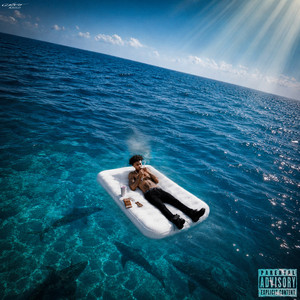
Bladee released Sulfur Surfer today, May 20, 2026, on his own Trash Island label. It is the official follow-up to 2024's Cold Visions, and it is fully produced by Whitearmor, the Drain Gang member who has shaped most of the collective's sound since the beginning. The lead single "Blondie" arrived last week with a Joe Ward-directed video. The headline credit, the one that had the AOTY comment section losing it before the album even posted, is a feature from Current 93, the long-running English experimental project led by David Tibet.
That last detail is worth saying twice. A Drain Gang album with a Current 93 credit on it is not a thing anyone had on a bingo card. The two acts live in different decades, different scenes, and arguably different universes. Tibet's apocalyptic folk project predates Bladee by a couple of decades and sits closer to industrial and neofolk than anything in the digicore lineage. The connection is real, though. Tibet posted about the album himself, thanking Bladee directly. How the contact happened is still the open question fans are chewing on.
A 7 from us means a record that does most of what it sets out to do, has at least one genuinely strange idea worth the price of entry, and will reward the people who already speak the language. Sulfur Surfer is exactly that. The number is going to read as low to the part of the fanbase that treats every Bladee release as canon on arrival. It is not meant as a knock.
What it actually sounds like
Strip the novelty feature away and Sulfur Surfer is a Whitearmor record first. That matters. Cold Visions was a sprawl, more than a dozen producers, a rage-adjacent maximalist blur that ranked near the top of several year-end lists in 2024. This one is the opposite move. One producer, one sensibility, and a tighter frame around Bladee's voice.
Whitearmor's signature is all over it: the blown-out low end, the digital melancholy, melodies that sound like they are being remembered rather than performed. "Blondie" set the tone as a slow, ceremonious thing, and the album largely keeps that register. Where Cold Visions sprinted, Sulfur Surfer drifts. Whether that reads as focus or as sedation is going to depend on the listener, and that tension is most of why this is a 7 and not a 9.
When it works, it really works. The mid-album stretch is the strongest argument for the single-producer approach, the kind of run that rewards headphones and a dark room. When it sags, it sags in the way slow Bladee records always have, a couple of tracks that feel more like texture than song. The fanbase that believes he can do no wrong will not notice. Everyone else will clock it.
“Where Cold Visions sprinted, Sulfur Surfer drifts. Focus or sedation depends entirely on who is listening.”
The Current 93 feature
The thing people will remember about this album in a year is the Tibet credit, so it deserves real attention rather than a footnote. Early listeners are split on what the feature even is. Some are convinced it is a genuine vocal contribution. Others suspect it is a sample whose clearance required a feature credit, the way James Ferraro's presence functioned on Cold Visions. As of right now, with the album only hours old, that has not been confirmed either way, so treat the specifics as unsettled.
What is not in dispute is the gesture. Reaching across that much distance, from a 2026 Drain Gang record to a project rooted in the British experimental underground of the 1980s, is the most interesting decision on the album. It signals an artist who is bored of his own lane and willing to look somewhere genuinely odd for a way out. Even when the execution is more curious than transcendent, that instinct is the reason Bladee still matters past the meme.
Where it sits in the catalog
Sulfur Surfer is not the reinvention Cold Visions was, and it is not trying to be. It reads as a consolidation, Bladee and Whitearmor narrowing back down to the core relationship after a busy stretch that included the Ste the Beautiful Martyr 1st Attempt EP, the Evil World EP with Yung Lean, and a run of features for Oklou, Thaiboy Digital, and others. After all that motion, a quiet, single-producer album from the two people who started this is its own kind of statement.
The summer is built to carry it. Bladee has festival dates lined up with Yung Lean, including Lyrical Lemonade Summer Smash in Chicago on June 13, Roskilde in Denmark on July 3, and a Boiler Room set in London on August 1. "Sulfur Surfer summer" was already a phrase in the comments before most people had finished a first listen.
A 7 means: buy it, sit with it, do not expect it to rearrange your life. For an artist this far into a cult career, a focused, strange, slightly uneven album that still finds a way to surprise is not a disappointment. It is the job done well.
The economics behind the drop
Here is the part that should sit underneath every Drain Gang release. Bladee owns Trash Island. He put this record out himself, on his own label, the way the most independent corner of this scene has learned to operate because the alternative is worse. Most artists do not have that. Most artists hand a finished album to a system that takes the majority of the upside, hides the math, and pays out on a delay measured in months.
That gap between how Bladee operates and how everyone else is forced to operate is the whole problem Signed Trade is built around. Streaming economics are opaque by design. Royalty splits get buried. The people who actually made the song are the last to see the money, if they see it clearly at all.
Signed Trade is building something different, and it is coming. The platform is not live yet. For now signed.trade routes to a waitlist, and being early is the point.
The idea is straightforward. You buy music directly from artists, with no label middlemen and no streaming-service skim, so the transaction is between fan and artist. Every royalty split is public on an open ledger, every dollar from every stream and every sale traceable, for every split on every track, with nothing hidden. Artists get paid instantly, every stream and every purchase, in real time instead of on a quarterly delay. And tracks carry a market cap that moves with performance, driven by sales and streams, so fans can listen and also invest in how a track actually does.
A scene that already runs its biggest releases through artist-owned labels like Trash Island is the scene that has the most to gain from a transparent market underneath the music. If you want in early, join the waitlist at signed.trade.